
00 // Concept
The idea behind this project is to create an AI-generated character that looks genuinely realistic in terms of facial features. I’ve generally been able to tell whether an image of a person was AI-generated or real—there are subtle cues that often give it away. The most obvious one is the plasticky, artificial-looking skin.
That said, I’ve recently seen some Nano Banana Pro-generated images that are genuinely difficult to distinguish from real photographs. This led me to test the limits of how realistic an AI-generated person can actually be.
01 // Nano Banana vs Nano Banana Pro
I started with Nano Banana to better understand its limitations. My initial generations were “okay” in terms of realism. The skin often felt plastic-like, pores were too uniform, background hair looked overly sleek, lips were too perfect, and ear details were lacking. However, at first glance, the images were convincing enough.
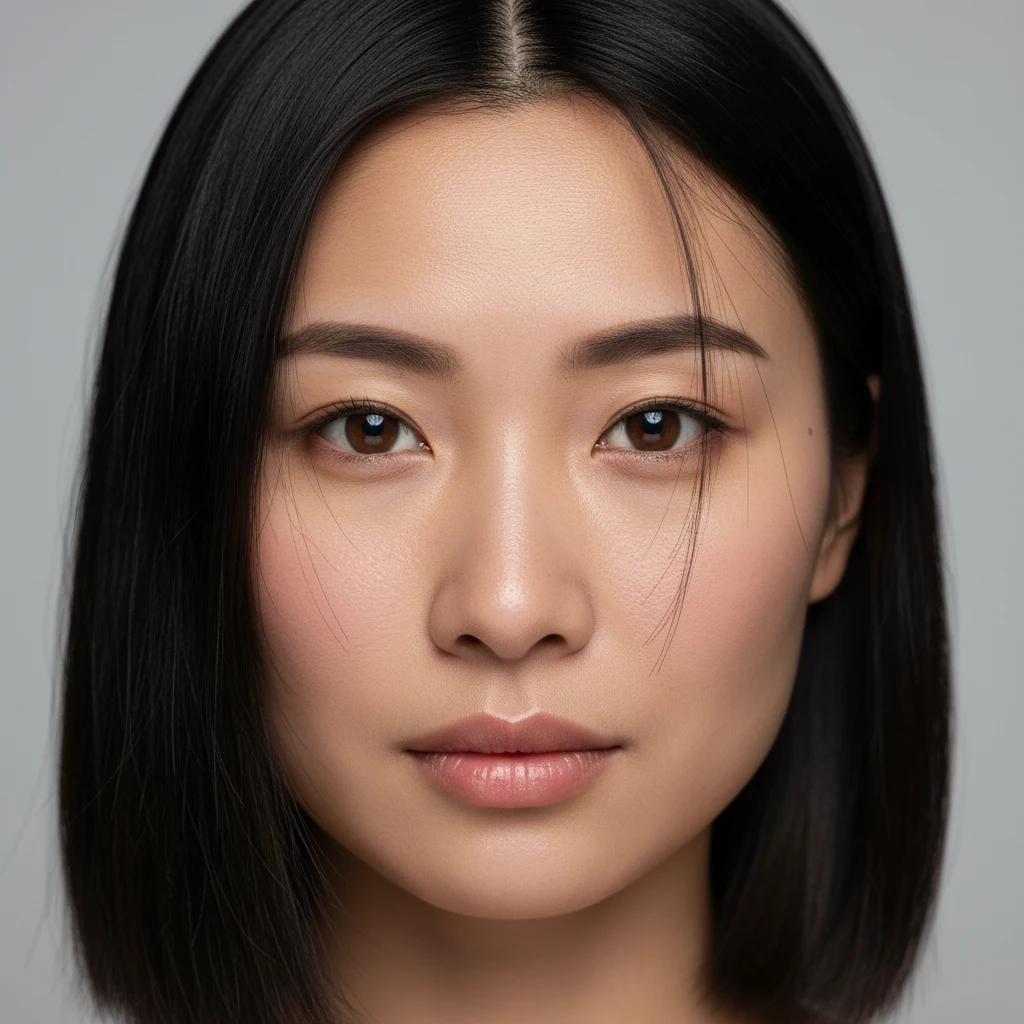
When experimenting with different shot types—such as 3/4 shots and full-body shots—the quality and level of detail dropped noticeably. As the framing widened, the face began to look less consistent with the close-up version. Hair became more homogeneous, with less frizz and fewer visible strands. This is understandable, as the resolution is limited to around 1K, meaning facial details become less visible as the subject occupies less of the frame.
Switching to Nano Banana Pro was an incredible upgrade. Previously, I had considered using tools like Topaz or Enhancor—especially Enhancor for skin upscaling—but the level of detail generated by Nano Banana Pro made those tools unnecessary, in my opinion.
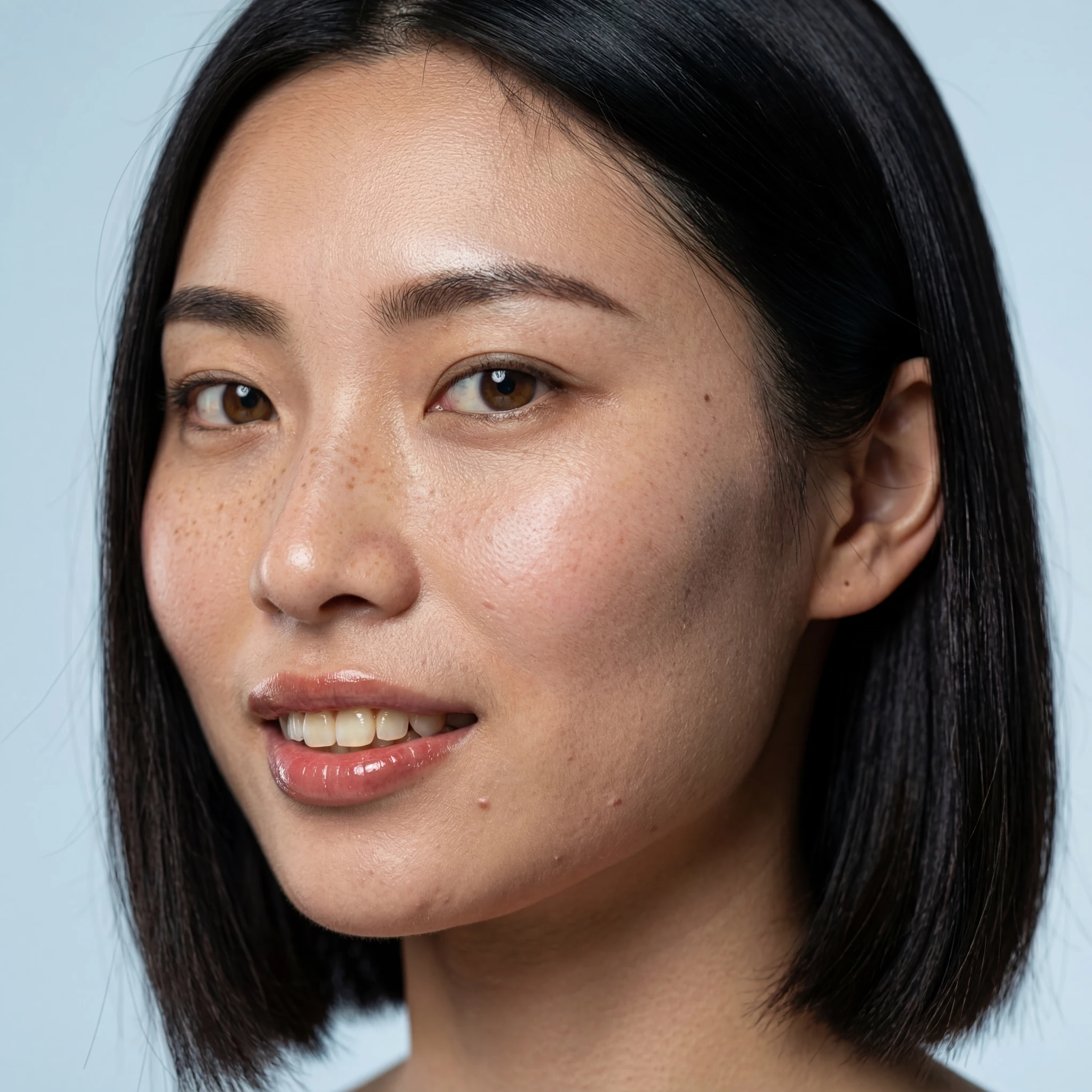
With the right keywords, the facial details became realistic and nearly indistinguishable from real photography. Hair looked far more believable, skin pores were less uniform, ears had more structural detail, lips appeared glossy and natural, blush looked authentic, and the skin had a subtle dewiness. Small details such as peach fuzz and baby hairs also became visible. Of course, this is helped by the fact that Nano Banana Pro can generate 4K images, but even the 1K and 2K outputs are noticeably more detailed.
Beyond facial features, lighting is what truly differentiates the two. In Nano Banana Pro, highlights and shadows behave more realistically, especially in how they interact with skin pores. There’s a natural oiliness to the skin that feels photographic rather than synthetic. Again, higher resolution plays a big role in enabling these micro-details.
02 // Realistic Facial Features
From my experience, the key to realistic facial features is imperfection. The areas I focus on most for achieving realism are hair, skin texture, and lips. Other features—such as the nose, eyes, eyebrows, and teeth—are generally generated quite convincingly by both Nano Banana and Nano Banana Pro without much intervention.
| Detail | Keywords | Explanation |
|---|---|---|
| Hair | Individual strands, baby hairs, coily/curly texture, stray strands | Defining texture and explicitly adding micro-details like stray strands adds a significant level of realism. |
| Skin | Visible pores, subsurface scattering, peach fuzz, T-zone | Simulates light diffusion within skin layers and adds micro-imperfections for a non-synthetic look. |
| Lips | Glossy, saturated, highlight | Matte lips often look artificial; glossiness helps convey realistic light interaction and moisture. |
03 // Full Reference Shot
For reference images, I decided to use both a close-up shot and a full-body shot, following the approach outlined in this video. The idea is to capture detailed facial features from the close-up while preserving accurate body proportions from the full-body image.
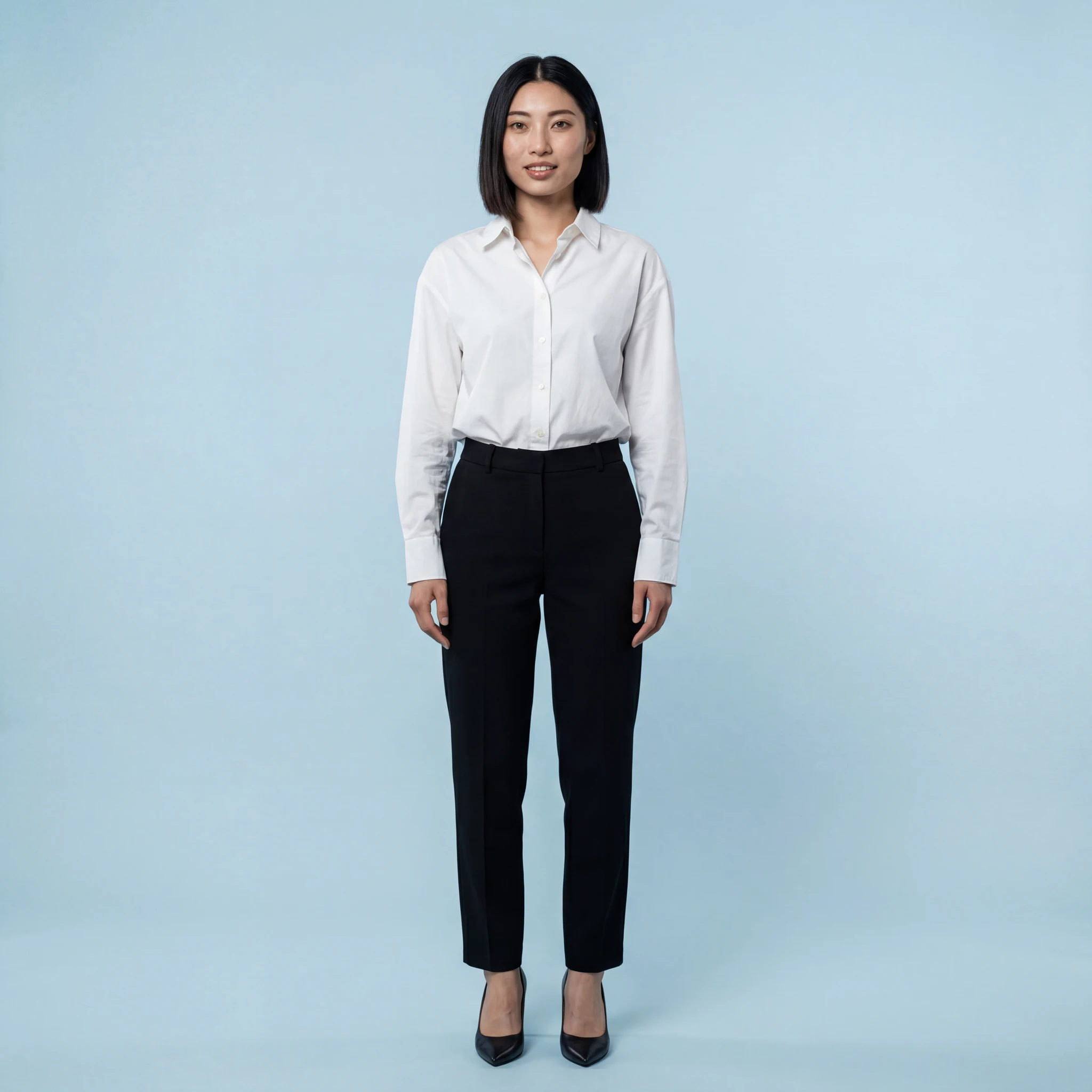
For the full-body shot, I dressed the character in a neutral outfit: a white shirt, black trousers, and high heels. Having additional angles—such as side or back views—would be beneficial for dynamic scenes, but they weren’t necessary for this particular spec project.
04 // Retrospective & Lessons Learned
Loss of Detail in Wider Shots
As the framing moves from close-up to full-body, fine details are inevitably lost. Micro-details such as peach fuzz, acne, freckles, and beauty marks become less visible or disappear entirely. Facial structure can also shift slightly. Because of this, it’s crucial to first generate a fully detailed 4K close-up reference. Pairing this with additional shots—like 3/4 or full-body views—helps maintain facial consistency and proportions.
Checkpoints matter
Never discard previous generations too quickly. Even if an image has some misalignment issues, it may contain facial features or structural elements worth preserving. Use these successful generations as references to refine and improve future outputs.
Nano Banana Pro prompting
Prompting is especially important when using Nano Banana or Nano Banana Pro. Reading the official Google documentation is highly recommended, as Gemini 3.0 Pro has very strong embeddings and an excellent understanding of language. If you’re coming from tools like ComfyUI, prompt quality becomes even more critical, since Nano Banana does not offer ControlNet, IP-Adapter, or similar guidance tools.